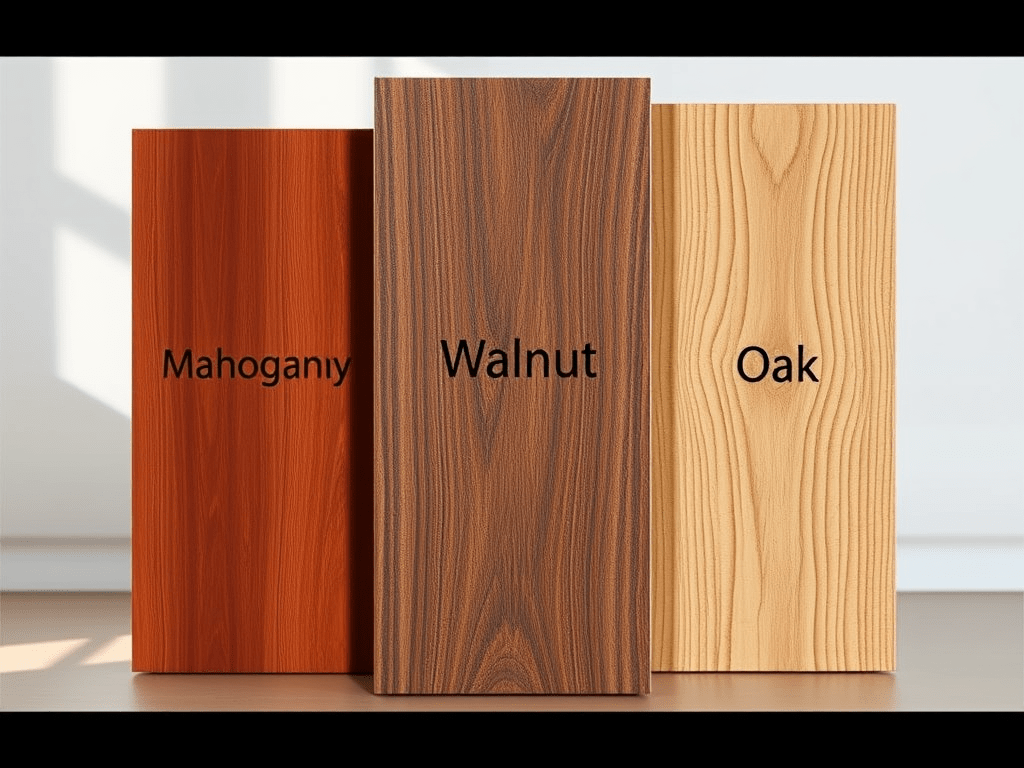
Choosing the right hardwood can make or break a woodworking project. Mahogany, walnut, and oak are three of the most popular options—but each brings different strengths to the shop. Let’s discuss their appearance, workability and durability. Hopefully, this will help you confidently choose the right wood for your next build.
Appearance and Grain
Mahogany
Mahogany features a straight, uniform grain with a smooth texture and a warm reddish-brown color that deepens with age. Its consistency gives finished projects a refined, high-end look.
Walnut
Walnut is darker and richer, ranging from chocolate brown to deep purplish tones. Its grain is usually straight but can be more varied, adding character and contrast to furniture pieces.
Oak
Oak has a bold, open grain with prominent texture. It is available primarily in red oak and white oak. These options offer a lighter, more traditional appearance. This style works well in rustic or classic designs.
Workability
Mahogany
Exceptionally easy to work with. It cuts cleanly, sands smoothly, and responds well to both hand tools and machines. Tear-out is minimal, making it ideal for detailed joinery.
Walnut
Also very workable, though slightly harder than mahogany. It machines well but benefits from sharp tools to maintain clean edges.
Oak
Harder and heavier than both mahogany and walnut. Oak’s open grain can cause tear-out and requires more effort during sanding and finishing.
Durability and Strength
Mahogany
Highly stable with excellent resistance to warping and shrinking. Suitable for furniture, cabinetry, and interior architectural elements.
Walnut
Strong and durable, though slightly less stable than mahogany. Best suited for indoor furniture and decorative pieces.
Oak
Extremely strong and wear-resistant. White oak, in particular, has good moisture resistance, making it suitable for flooring and some outdoor applications.
Finishing Characteristics
Mahogany
Takes finishes evenly and looks best with clear or lightly tinted finishes that enhance its natural color.
Walnut
Often finished with oil or clear coats to preserve its dark natural tones. Heavy stains are rarely needed.
Oak
Absorbs stain unevenly due to its open grain and often requires grain filler for a smooth finish.
Cost and Availability
- Mahogany: Typically more expensive; pricing depends on species and sourcing
- Walnut: Premium domestic hardwood; usually expensive but readily available
- Oak: Most affordable and widely available of the three
Best Uses by Project Type
| Project Type | Best Choice |
|---|---|
| Fine furniture | Mahogany or Walnut |
| Cabinets & built-ins | Mahogany |
| Rustic or traditional furniture | Oak |
| High-end decorative pieces | Walnut |
| Flooring & heavy-use surfaces | Oak |
| Art and Frames | All three – Walnut is my favorite |
Final Verdict
- Choose mahogany if you want stability, ease of use, and a classic luxury look
- Choose walnut for dramatic color and premium furniture pieces
- Choose oak for strength, affordability, and traditional character
Each wood has its place in a well-rounded woodworking shop. Understanding their differences helps you build smarter, reduce waste, and deliver better results.
The artist in me loves all three options. Still, my choices are guided by the aesthetic aspect of the wood. The choice comes when I know what I want to achieve in each art piece. I often love to mix woods in my art pieces. Although I typically always use black walnut or Peruvian walnut for my frames.
There are so many choices of domestic and exotic woods and they represent a host of colors. I will talk about some other options in a future post. Till next time, check out all the varieties. Do some research on appearance, workability, and durability before you jump in on a project. Visit a lumbar yard and ask questions. Search the internet and see what others say. Some species have a high chance of causing allergies. So it is always good practice to do some research before you start your next project.
Till next time
Elizabeth
 Diary of a Wood Artist
Leave a comment